


When Glass Looks Simple, But the Execution Is Not
The render looks perfect. A glass entrance, full height, frameless, clean lines. Everyone signs off.
Then it hits the site. Can this panel size actually be fabricated? Will the fixing method hold against wind load? Does the aluminium profile match the rest of the building? Is there enough lead time before handover?
Glass sells well in a presentation. It’s a different story on site. The result depends on a chain of decisions, measurements, detailing, fabrication, hardware, coordination with other trades, and installation accuracy. Break one link in that chain, and the “simple” glass wall is the reason the project slips.
This is why glass works need a specialist, not just a supplier. From façade glazing and entrances to office partitions, feature walls, and decorative glass, architectural glass needs a team that understands both design intent and site execution. That’s the gap Timbergloss fills — glass and aluminium works across Dubai, from concept through to final install.
Why Architectural Glass Matters in Dubai Projects?
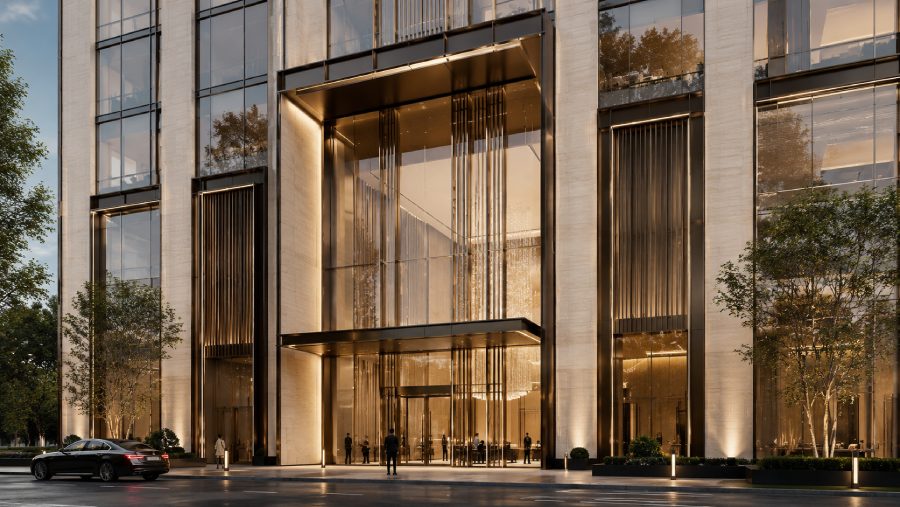
Walk into almost any new commercial, retail, hospitality, or office project in Dubai, and glass is doing a lot of the work. There’s a reason for that.
Glass brings light and openness into spaces that would otherwise feel boxed in. It makes entrances and façades memorable, the first impression a client, guest or tenant gets before they’ve even stepped inside. It divides space without closing it off, which matters in offices, clinics, and showrooms where privacy and openness both need to exist in the same floor plan. And it reads as modern, premium, intentional, the design language clients are asking for across hotels, retail spaces, and corporate offices alike.
But Dubai projects move fast. Timelines are tight, trades overlap, and there’s little room for rework. That makes proper technical execution non-negotiable. Getting the design right is only half the job; glass works in Dubai succeed or fail on how well they’re measured, detailed, and installed.
What Is Architectural Glass in a Commercial Project?
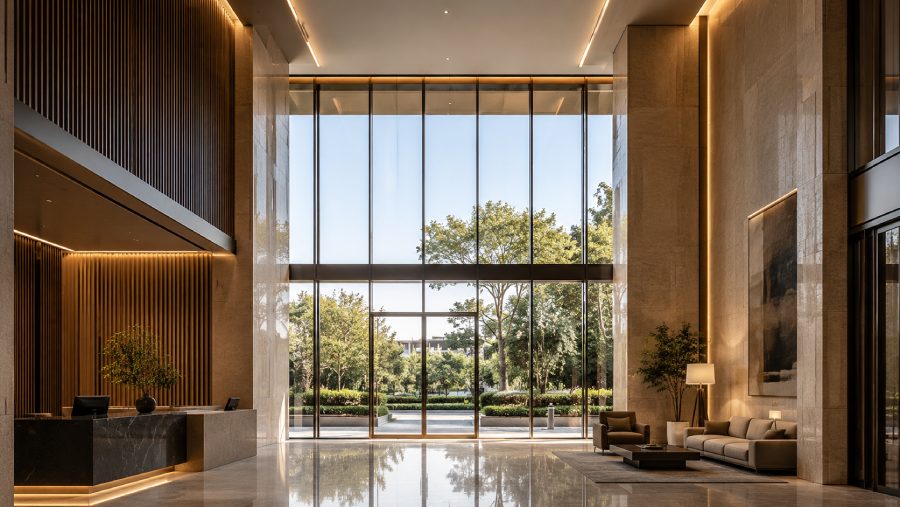
Architectural glass isn’t one product. It’s a category, and the right choice depends entirely on where it sits and what it needs to do.
Exterior Architectural Glass
This covers façades, curtain walls, shopfronts, entrance glazing, canopies and skylights. It’s structural, weather-facing, and the first thing anyone sees from the street.
Interior Architectural Glass
Partitions, sliding systems, meeting room glass, decorative panels, mirrors, feature walls and branded glass all fall here. The job is different, less about withstanding wind load, more about finish, privacy, and how it fits into the fit-out.
Functional and Decorative Glass
Then there’s the glass type itself: tempered, laminated, acoustic, frosted, tinted, back-painted, patterned. Each does something specific: safety, sound control, privacy, branding, and picking the wrong one for the application is a common (and costly) mistake.
Put simply: architectural glass is a project category, not a single material. It needs the right glass, the right system, and the right installation method working together — not just a pane that looks good in a render.
From Façades to Entrances: Glass That Shapes the First Impression
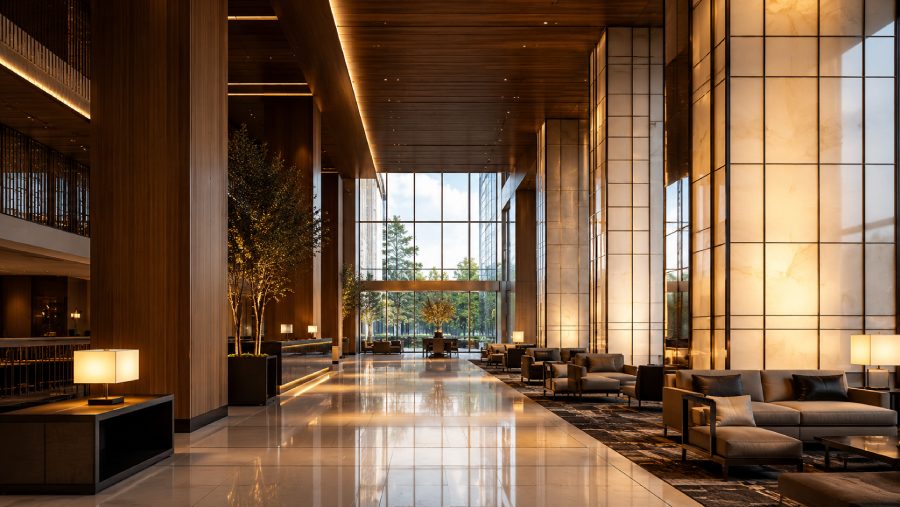
The exterior is where glasswork carries the most risk and the most visibility. Get it wrong, and everyone notices.
This covers façade glazing, shopfront glass, and main entrances, the surfaces that set the tone for a building before anyone walks in. Aluminium framing systems hold most of this together, though structural or frameless glass is increasingly used where the design calls for it and the engineering supports it.
None of this happens in isolation. Exterior glass requires constant coordination with architects, consultants, and contractors; wind load calculations, safety certifications, waterproofing details, and alignment all have to be signed off before a single panel goes up. Accuracy isn’t optional here. A façade that’s a few millimetres out of alignment, or a fixing detail that wasn’t checked against wind load, isn’t a small fix later; it’s a redo.
This is the part of architectural glazing in UAE projects where experience matters most. Timbergloss supports façade and entrance glass with design understanding, fabrication capability, and site installation coordination; handling the technical detail so the finished result actually matches the render.
Interior Glass Works in Dubai: Partitions, Meeting Rooms and Space Division
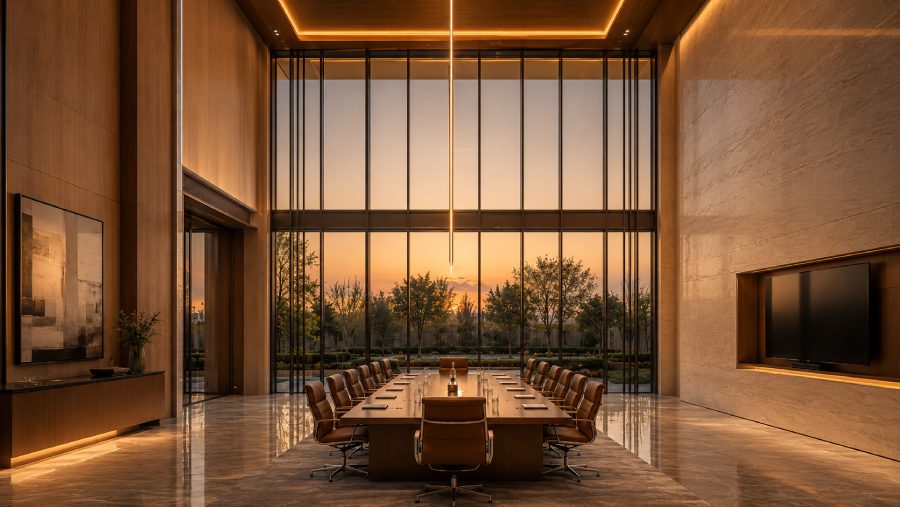
For fit-out teams, interior glass is where most of the day-to-day decisions happen, and where small details add up fast.
Office glass partitions, meeting room enclosures, manager cabins and reception glass all fall under this. Some need frameless systems for a clean, high-end look. Others work better framed, especially where budget or acoustic performance takes priority. Frosted or fluted glass gets used where privacy matters but natural light still needs to pass through, and acoustic glass goes into meeting rooms where conversations need to stay contained.
The appeal of interior glass works in Dubai comes down to one thing: it keeps spaces feeling open while still dividing them functionally. A solid wall closes a room off. Glass divides it without making the floor feel smaller, which is exactly what most modern offices, clinics and showrooms are trying to achieve.
This only works if the detailing is right: thickness, fixing method, hardware, and how it ties into ceiling and flooring junctions. Get that wrong, and partitions look fine on day one and start showing problems within months.
Feature Walls and Decorative Glass: Where Design Becomes Memorable
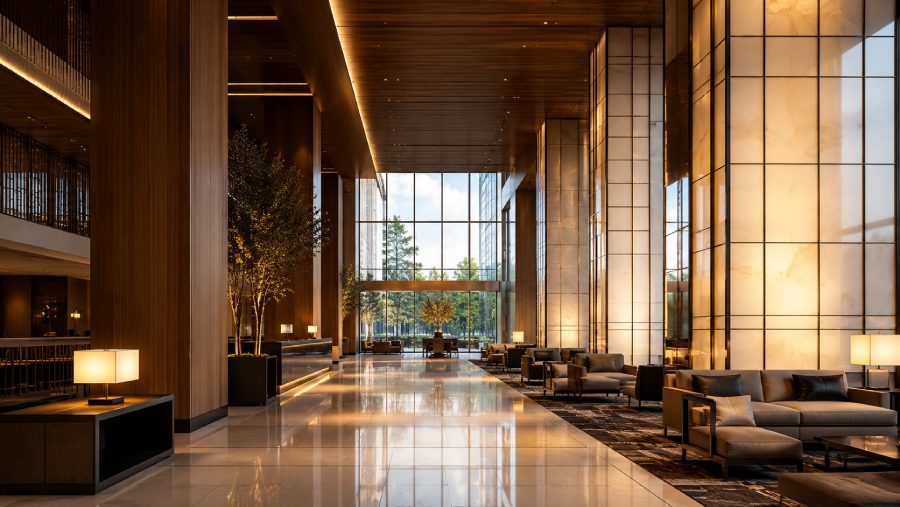
This is the part of the project where glass stops being functional and starts being the design statement.
Back-painted glass, decorative panels, fluted or patterned finishes, mirror walls, branded glass for receptions, this is where a designer’s concept actually gets to show. Glass also rarely works alone here. Decorative glass often works best when paired with lighting, metal trims, and bespoke joinery works in Dubai to create a complete interior feature.
Retail entrances, hospitality lobbies, office receptions, and clinic waiting areas all lean on this kind of glass to set a tone before a single word is spoken to a visitor.
The catch: decorative glass needs to be right the first time. Finish, colour, panel size, and how light hits it all need to be checked against samples, not just specified on paper. This is where Timbergloss can support designers with finish options, samples, detailing, and fabrication advice before final production, so what gets approved is actually what gets installed
Why Designers Should Involve a Glass Contractor Early
Here’s where most projects lose time and money: glass details get left until the end of the fit-out process, treated as something to “finalize later.” That’s a mistake.
A glass contractor brought in early can flag problems before they become expensive ones, panel size feasibility, glass thickness, edge finishing, fixing method, aluminium profile selection, and door hardware. Site access and handling matter too; a panel that looks fine on a drawing might not actually fit through the building’s loading bay or lift. Safety requirements need checking against the application, not assumed. And none of this happens in a vacuum; it has to be coordinated with flooring, ceiling, joinery, and MEP teams, all of whom are making their own decisions on the same timeline.
Bring a glass contractor Dubai project relies on into the conversation early, and these get resolved on paper. Leave it late, and they get resolved on site; usually at the cost of redesign, delays, wrong measurements, and rework nobody budgeted for.
The earlier the input, the fewer surprises later. It’s that simple.
How Timbergloss Supports Designers and Fit-Out Contractors
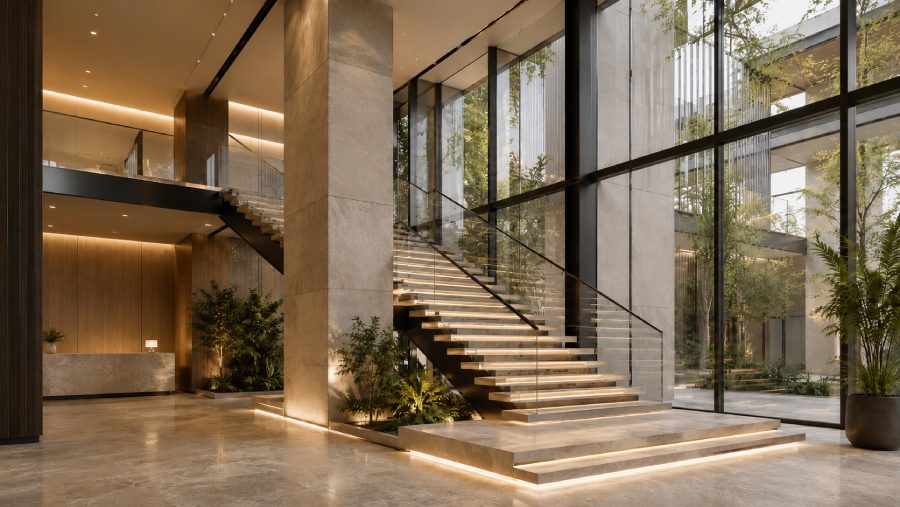
Timbergloss works across the full project lifecycle, not just fabrication and delivery, but everything that happens before and after.
Design Advice and Material Guidance
Every project starts with the same question: which glass actually suits this application? Timbergloss helps teams choose the right glass type, finish, frame, and fixing method based on how the space will actually be used, not just how it looks in a mood board.
Technical Detailing
This is where projects either stay on track or start slipping. Shop drawings, site measurements, joint details, fixing points, profile coordination, and hardware selection all get worked through before fabrication starts, so there are no surprises once production begins.
Fabrication Support
From cutting and polishing to processing and aluminium framing, Timbergloss handles customised glass solutions in-house, built to the exact specification the project needs, not a generic stock size.
Site Installation
The final stage is where execution either holds up or falls apart. Installation planning, site coordination, quality checks, and finishing accuracy are managed end-to-end, so the glass that goes up on site matches what was approved on paper.
This is what glass and aluminium works in Dubai actually require, not a vendor who shows up with panels, but a glass contractor that Dubai design and fit-out teams can rely on at every stage of the project.
Common Types of Glass Used in Architectural Projects
Different applications call for different glass; here’s the practical breakdown.
Tempered Glass
The standard choice where safety and strength matter most. It breaks into small, blunt fragments rather than sharp shards, which is why it’s required for most commercial applications.
Laminated Glass
Built for safety, security, and sound reduction. Two or more layers bonded together mean it holds together even when cracked, useful for entrances, balustrades, and anywhere extra protection matters.
Acoustic Glass
Purpose-built for meeting rooms, offices, and any space that needs sound control. If conversations need to stay private, this is the glass that makes it happen — not standard tempered or laminated.
Frosted, Tinted, and Decorative Glass
For privacy without losing light, or for making a design statement. Frosted works well for partitions and cabins; tinted and decorative glass gets used where the brief calls for a specific look or mood.
Back-Painted Glass and Mirrors
The go-to for feature walls, receptions, retail counters, and hospitality interiors. Back-painted glass delivers a clean, solid-colour finish that reads as premium without the cost of natural stone.
Picking the right type isn’t guesswork; it comes down to matching the glass to what the space actually needs to do.
What Fit-Out Teams Need from a Glass Works Partner
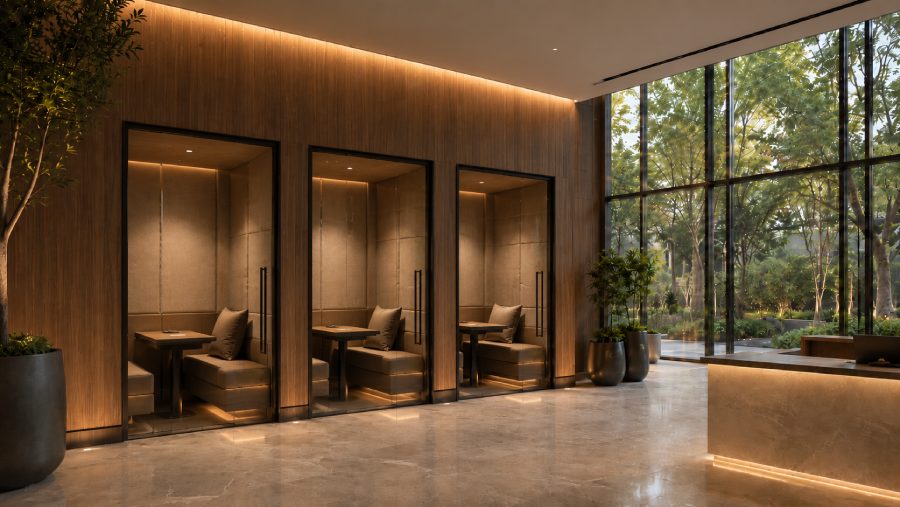
Fit-out contractors don’t need a glass supplier who makes things complicated. They need one that makes the job easier.
That means fast response when site questions come up, because on an active fit-out, decisions don’t wait. Accurate site measurement so panels arrive right the first time, not close enough. Practical detailing that works with what’s actually on site, not just what was on the original drawing. Clear production timelines that fit into the overall programme, not timelines that shift without notice.
It also means coordination with other trades, flooring, ceiling, joinery, and MEP, without the glass works team becoming a bottleneck. Safe handling and installation so nothing gets damaged between delivery and fixing. And finishing quality that holds up on the final snag walk, not just on the day of install.
When a site issue comes up, and it always does, a good glassworks partner in Dubai solves it without slowing the project down. That’s the standard fit-out teams should be holding their glass contractor to.
How to Choose the Right Glass Contractor in Dubai?
Not every glass company is set up for commercial projects. Here’s what to check before committing.
Do they handle both glass and aluminium?
Most architectural glass installations require aluminium framing, profiles, and hardware. A contractor who only does glass will need to subcontract the rest, which adds a coordination risk you don’t need.
Can they support technical detailing?
Shop drawings, site measurements, fixing details; if they can’t produce these, the design intent doesn’t survive contact with the site.
What’s their fabrication capability?
A contractor who relies entirely on third-party fabrication has less control over quality, lead time, and customisation. Ask directly.
Do they understand commercial fit-out timelines?
A residential glazier and a commercial glass contractor are not the same thing. Programme pressure, trade coordination, and fast-turnaround decisions require a different level of experience.
Have they worked on similar projects?
Retail, hospitality, office, and clinic projects each have different requirements. Check whether their portfolio matches your project type.
Can they work with designers, consultants, and contractors?
Glass works sit at the intersection of design intent and site reality. The right partner communicates across both sides, not just one.
Architectural Glass Works Best When Design and Execution Work Together
Architectural glass isn’t just about transparency or aesthetics. It affects safety, function, privacy, acoustics, branding, and the overall quality of a project. Specified well and executed properly, it’s one of the strongest design moves a fit-out can make. Handled as an afterthought, it’s one of the most expensive problems to fix.
For designers and fit-out teams, the decision that matters most isn’t which glass type to specify; it’s which partner to involve and when. The right glass contractor, brought in early, protects both the design intent and the project timeline.
If you’re planning architectural glass, interior glass works, or glass and aluminium works in Dubai, Timbergloss can support your project from design advice and detailing through to fabrication and installation. Get in touch to discuss your project.