


Thinking about adding privacy glass to an office or boardroom in Dubai, and can’t decide between smart glass and smart film? You’re not alone, and honestly, neither option is automatically “better.” Each one solves a different problem.
Smart glass tends to suit new-build projects and permanent architectural installations, where the glazing is specified from the start. Smart film, on the other hand, is built for retrofit work; it goes onto glass you already have. Which one makes sense for you comes down to a handful of practical factors: privacy needs, budget, how much disruption you can tolerate during installation, durability expectations, and how the final finish should look.
Here’s a quick side-by-side before we get into the details.
Smart Glass vs Smart Film
| Factor | Smart Glass | Smart Film |
| Privacy on demand | Excellent | Excellent |
| Works with existing glass | Usually needs replacement | Ideal for retrofit |
| New construction | Excellent fit | Possible, but not the natural choice |
| Initial investment | Higher | Generally lower |
| Installation | More involved | Faster |
| Finish | More integrated, premium feel | Good, but can show its seams |
| Optical clarity | Usually better with premium systems | May show more haze |
| Durability | Generally higher | More exposed to wear |
| Wet areas | Often the preferable choice | Depends on the product |
| Best application | Permanent architectural solution | Upgrading glass you already own |
What Is Smart Glass?
Smart glass, also called switchable or privacy glass, is glazing that changes from clear to opaque at the flip of a switch. Most systems on the market use PDLC technology (polymer dispersed liquid crystal), a thin film of liquid crystal droplets sandwiched between layers of glass.
Here’s the mechanism in plain terms: when power runs through the film, the crystals line up and let light pass straight through, so the glass looks transparent. Cut the power, and the crystals scatter into random positions, scrambling light and turning the pane into a frosted, private surface. No blinds, no curtains, just a switch or a remote.
In Dubai, this technology usually gets built into the glazing itself during manufacturing, which is why it’s most common in new-build and architectural specification projects rather than retrofits.
Where Is Smart Glass Commonly Used?
You’ll find it specified in:
- Offices and executive suites
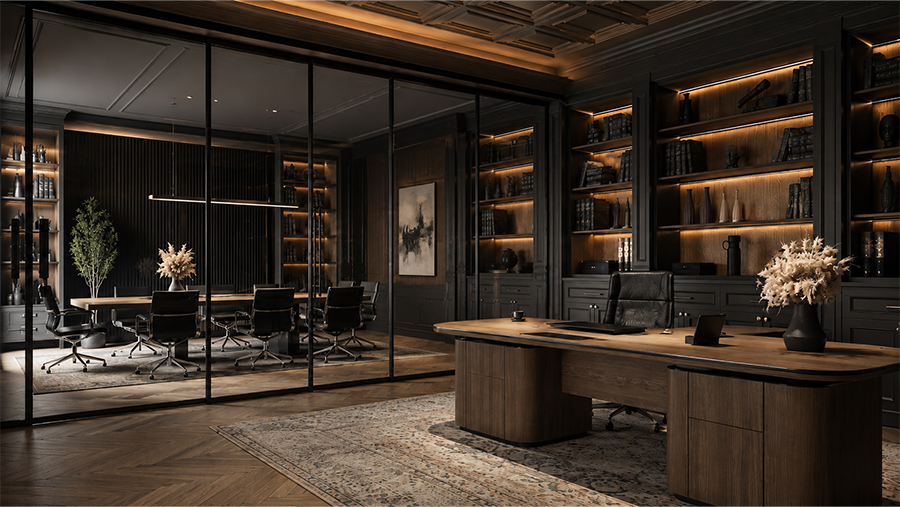
- Meeting rooms and boardrooms
- Villas and private residences
- Bathrooms
- Bedrooms
- Glass partitions separating open-plan spaces
- Healthcare settings and other spaces where privacy needs to be instant and reliable
What Is Smart Film?
Smart film works on the same PDLC principle: clear when powered, frosted when not, but instead of being built into new glass, it’s applied directly onto glass that’s already installed. Think of it as a retrofit layer rather than a replacement product.
Installation involves fitting the film to the existing pane and wiring it into a power source and control switch. Because the glass itself doesn’t need to change, the whole job tends to move faster and disrupt the space far less than a full glazing replacement.
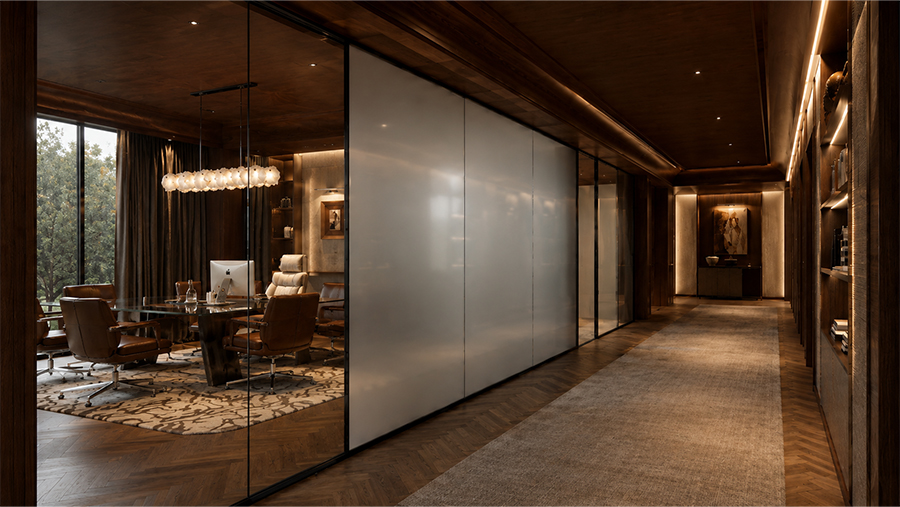
This is exactly why smart film has found its footing in renovation projects across Dubai: offices updating a meeting room, villas adding privacy to a bathroom without ripping out glazing, or landlords upgrading a space between tenancies.
Why Is Smart Film Popular for Retrofit Projects?
A few reasons keep coming up with clients:
- The existing glass usually doesn’t need to be touched
- Far less disruption to the space during installation
- Installation timelines are noticeably shorter
- Lower upfront cost than new glazing
- A practical fit for office renovations where downtime is expensive
What’s the Real Difference Between Smart Glass and Smart Film?
Strip away the marketing language and the two products are solving the same core problem: on-demand privacy through different routes. Smart glass is a manufactured product, built to switch states from day one. Smart film is a retrofit product, added to glass that already exists.
That one distinction shapes almost everything else: cost, installation timeline, finish quality, and where each option makes practical sense. Before choosing either, it’s worth comparing them across the factors that actually affect day-to-day use: privacy strength, appearance, installation, cost, durability, and how they hold up to Dubai’s climate.
1. Privacy Performance
Both smart glass and smart film switch between a clear state and a frosted, opaque state, but “opaque” isn’t a single fixed level of privacy. How private a frosted pane actually feels depends on a few things working together:
- Lighting conditions — a brightly lit room behind frosted glass can still throw faint silhouettes, especially at night when interior lights are on and exterior light is low
- Viewing angle — privacy tends to hold up better when viewed straight-on than from a sharp side angle
- Distance — closer viewing distances can reveal more detail through the frosted state than glancing past from across a room
- Day vs. night — daytime privacy is usually stronger, since natural light doesn’t silhouette shapes the way interior lighting does after dark
Does Smart Glass Provide Complete Privacy?
Not automatically, and any supplier who claims otherwise is oversimplifying. Privacy quality comes down to the product’s specification, the lighting in and around the room, viewing distance, and how well the system was installed. A well-specified system in a well-lit bathroom will outperform a budget system installed without much thought given to where light sources sit.
2. Optical Clarity and Haze
This is one of the biggest pain points buyers run into after installation and one competitor content tends to skip over entirely.
Not all “clear” states look the same. When smart glass or smart film is powered on, some systems look genuinely invisible, like ordinary glass. Others carry a faint milky tint or haze, most noticeable at certain angles or under direct sunlight. That haze comes down to the quality of the PDLC film, the lamination process, and how well the panel was manufactured or installed.
A few things worth knowing before you specify anything:
- Haze varies by viewing angle; a panel that looks crystal clear head-on can pick up a slight cloudiness when viewed from the side
- Premium systems generally show less haze than budget alternatives, though price alone isn’t a guarantee
- Lower-quality systems are more prone to a visible tint even in the “transparent” state
- Always ask for a sample panel before committing; photos and spec sheets don’t tell you how a system actually looks in your lighting
Which Looks Better When Transparent?
Smart glass generally has the edge here, since the switching layer is laminated between glass during manufacturing rather than applied as a surface film afterward. That gives it a more integrated, seamless look. Smart film can look very good too, but it’s applied to an existing surface, so the finish depends heavily on how carefully the installation was done.
3. Installation and Retrofit
The installation process is where the two products diverge most sharply.
Smart glass is typically ordered pre-manufactured to size, then installed as new glazing, meaning it usually replaces what’s currently there. That means factoring in electrical wiring at the frame or wall, coordination with the wider fit-out or construction schedule, and a longer lead time overall.
Smart film skips most of that. It’s applied directly onto glass that’s already in place, so there’s no need to remove or replace panels. The trade-off is that the results depend more on surface prep and installer skill, since the film needs a clean, compatible surface to bond to properly.
- New glazing (smart glass): built into manufacturing, coordinated with construction or fit-out timelines
- Existing glazing (smart film): applied on-site to current panels, no glass removal needed
- Electrical connections: required for both, but smart film often reuses simpler wiring routes
- Disruption: smart glass installation tends to affect the space more; smart film is usually quicker and less invasive
- Timelines: smart film projects generally wrap up faster
Can Smart Film Be Installed on Existing Glass?
Yes, in most cases, but the glass needs to be clean, structurally sound, and compatible with the chosen film system. Older or damaged glass, or panels with certain coatings, may need extra prep work or might not be suitable at all. This is worth confirming with a supplier before assuming any pane in the building is fair game.
4. Smart Glass vs Smart Film Cost in Dubai
Let’s get one thing out of the way: this isn’t the section where you’ll find AED figures. Pricing varies too much by supplier, specification, and project scope to publish reliable numbers here, and any article that does is either guessing or selling you something. What we can walk through are the factors that actually drive cost up or down.
What Affects Smart Glass Cost?
- Glass size and overall panel dimensions
- Glass specification (single vs. laminated, tempered, etc.)
- Lamination quality
- Thickness
- Control systems: basic switches vs. automation-ready setups
- Electrical work required at installation
- Installation complexity
- Integration with home or building automation
What Affects Smart Film Cost?
- Size of the existing glass being covered
- Film quality and brand
- Number of panels involved
- Wiring requirements
- Ease of access to the glass for installation
- Overall installation complexity
Is Smart Film Cheaper Than Smart Glass?
Generally, yes. Since smart film works with glass you already own, you’re skipping the cost of new glazing, manufacturing lead time, and often some of the electrical work. Smart glass, by comparison, usually means new glass, new installation, and full electrical integration, all of which add to the upfront investment. That said, project specifics matter: a large, complex film installation across many panels could still cost more than a small, straightforward smart glass panel.
5. Durability and Maintenance
Here’s where the “built-in vs. applied” distinction shows up again. Smart glass has its switching layer laminated between panes of glass, protected on both sides. Smart film sits on the surface of existing glass, exposed to daily wear, cleaning, contact, and scratches the way any film-based product is.
That doesn’t mean smart film is fragile. It means it needs a bit more care:
- Protection: smart glass’s laminated layer is shielded; smart film’s surface is more exposed
- Cleaning: both need gentle, non-abrasive products, but film is more sensitive to harsh chemicals or rough cloths
- Edge protection: poorly sealed edges are a common failure point for film installations
- Electrical connections: both rely on stable wiring; loose or poorly installed connections cause most switching issues
- Replacement: damaged smart glass usually means replacing the whole panel; damaged film sections can sometimes be replaced individually
How Long Does Smart Film Last?
There’s no single honest answer to this; lifespan depends on the quality of the film itself, how well it was installed, how often it’s switched, and how much sun, humidity, or handling it’s exposed to day to day. A well-installed, quality film maintained properly will consistently outlast a cheaper film installed carelessly, regardless of what a spec sheet promises.
6. Does Smart Glass Use Electricity All the Time?
Short answer: usually, yes, though it depends on the system.
Most PDLC smart glass works on a “power on, transparent” basis. Run current through the film, and the liquid crystals align, letting light pass through clearly. Cut the power, and the crystals scatter, turning the glass frosted. That means the glass typically draws power while it’s in its clear state and reverts to private mode automatically if power is lost; which is worth knowing for anyone thinking about outages or standby costs.
- Transparent state: power is applied, crystals align, glass looks clear
- Privacy state: power is removed, crystals scatter, glass turns opaque
- Power requirements: vary by manufacturer and panel size; there’s no universal wattage figure worth quoting here
- Fail-safe behavior: most systems default to privacy mode if power cuts out, which many buyers actually prefer for security reasons
Exact consumption and behavior differ between manufacturers, so it’s worth confirming the specifics with whichever supplier you’re considering rather than assuming all PDLC systems behave identically.
Can Smart Glass Connect to Home Automation?
Yes, and this is increasingly the default expectation for new installations rather than a premium add-on. Compatible smart glass systems can integrate with:
- Standard wall switches
- Remote controls
- Motion or occupancy sensors
- Full smart-home ecosystems
- Building management systems (particularly relevant for commercial and office fit-outs)
- Meeting-room control panels, often paired with scheduling or presence sensors
For offices and boardrooms specifically, this integration means the glass can switch automatically when a room is booked, occupied, or released; no one needs to remember to hit a button before a confidential meeting starts. For villas, it usually means grouping the glass into existing smart-home routines alongside lighting and climate control.
Not every system supports every integration, though; automation compatibility is worth confirming at the specification stage rather than assumed as standard.
Is Smart Glass Suitable for Bathrooms?
Yes, and it’s one of the more popular applications in Dubai villas and hotel-style bathrooms, but “suitable” comes with a few conditions worth knowing before specifying it.
- Privacy: switches instantly between clear and frosted, which works well for bathrooms that also serve as ensuites off a bedroom or living space
- Natural light: unlike frosted or etched glass, smart glass lets full daylight through in its transparent state, then closes off visibility without blocking the view when needed
- Wet-area considerations: the electrical components need to be properly rated and sealed for humidity; this isn’t optional in a bathroom setting
- Glass specification: laminated safety glass is standard for wet areas, smart glass or not
- Electrical safety: wiring and control switches should be installed away from direct water exposure and follow proper safety standards
- Edge sealing: poor sealing around panel edges is the most common cause of moisture-related failures over time
The takeaway: smart glass can absolutely work in a bathroom, but the outcome depends entirely on getting the specification and installation right; not just picking the product off a catalogue.
Does Smart Glass Block Dubai’s Heat and UV?
Here’s a distinction that gets blurred in a lot of supplier content: privacy control and solar/heat control are two different things, and PDLC smart glass mainly handles the first.
Switching a panel to its frosted state controls visibility; it doesn’t automatically mean the glass is blocking significant heat or UV. Some smart glass products do include solar-control benefits depending on the coatings or glazing specification used, but this isn’t a given across all PDLC systems, and it shouldn’t be assumed without checking the spec sheet.
Given Dubai’s climate, this matters more here than almost anywhere else. A few points worth considering when specifying:
- Standard PDLC smart glass primarily manages privacy, not solar heat gain
- UV and heat performance depend on the underlying glass specification, not the switching layer itself
- Solar-control coatings can be added to the glazing to address heat and UV separately from privacy
- Double glazing is often worth considering alongside smart glass in west- or south-facing installations, where heat gain is more of a concern
If solar performance matters as much as privacy for your project, which it often does here, it’s worth discussing both requirements with your supplier up front, rather than assuming privacy glass handles heat as a side effect.
Is Smart Glass Suitable for Dubai Villas?
Yes, and this is where smart glass tends to shine, since villas usually offer the freedom to specify glazing properly during design or renovation rather than working around existing installations.
Common applications in Dubai villas include:
- Bathrooms and ensuites
- Bedrooms, particularly those with glass partitions or feature walls
- Internal glass partitions separating living or family areas
- Home offices, where privacy is needed without closing off natural light entirely
- Dressing areas
- Entertainment spaces and media rooms
- General luxury interior features where a seamless, high-end finish matters
Architects and homeowners tend to gravitate toward it for one main reason: it lets a space stay open and light-filled most of the time, then close off completely when privacy is needed, without introducing blinds, curtains, or permanently frosted panels that block light around the clock.
Can Smart Glass Be Used for Office Meeting Rooms?
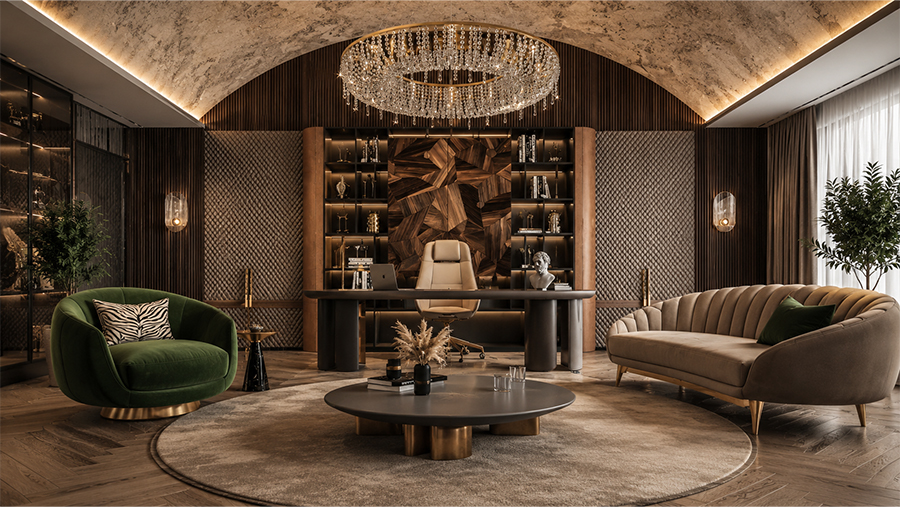
Yes, and it’s become a fairly standard specification in Dubai’s newer commercial fit-outs. Typical applications include:
- Meeting rooms
- Boardrooms
- Executive offices
- HR rooms, where confidentiality matters
- Interview rooms
- Private cabins and focus rooms
The appeal here is straightforward: switchable glass removes the need for blinds or permanently frosted film, which means the room can stay bright and open for most of the day, then switch to private the moment a confidential conversation starts. Paired with automation, tied to room booking systems or occupancy sensors, the glass can even switch on its own the moment someone walks in and books the space, no manual step required.
Which One Should You Actually Choose?
At this point, the decision usually comes down to one question: are you building something new, or upgrading something that’s already there? Here’s a practical breakdown by project type.
| Project Requirement | Recommended Option |
| Existing office glass | Smart Film |
| Existing villa glazing | Smart Film |
| New luxury villa | Smart Glass |
| Premium corporate office | Smart Glass |
| New meeting-room partitions | Smart Glass |
| Quick retrofit | Smart Film |
| Lower installation disruption | Smart Film |
| Premium integrated finish | Smart Glass |
| Long-term architectural specification | Smart Glass |
| Budget-sensitive renovation | Smart Film |
| Bathroom privacy | Smart Glass, subject to specification |
| Temporary or rental fit-out | Smart Film |
Choose Smart Glass If…
- It’s a new-build project, and glazing hasn’t been ordered yet
- A premium, integrated finish matters to the overall design
- Long-term durability is a priority over upfront cost
- The glass is being specified during the design phase, not added afterward
- You’re working on a bathroom or another permanent architectural application
Choose Smart Film If…
- The existing glass is already installed and in good condition
- Minimal disruption to the space is a priority
- You’re renovating rather than building from scratch
- Budget is more restricted than the new-build scenario allows
- Fast installation matters more than a fully integrated finish
Every project is different, so let’s talk through yours; reach out, and we’ll help you decide what actually fits your space: smart glass or smart film.